From the Healthy Latitude Journal
There Is No “Healthiest Place to Live”
What I learned after 8 years of chasing sun, testing houses, sleeping in tents, living on islands, surviving a medical disaster—and figuring out what actually makes a place healthy
David Key, QBP
ANMCB-certified practitioner and founder of Healthy Latitude
September 28, 2026
Everybody wants to know:
Where is the healthiest place to live?
Mexico?
Costa Rica?
Some little island nobody has ruined yet?
Closer to the equator?
Higher altitude?
Low EMF?
Near the ocean?
After doing this for about eight years I can save you some time.
There is no healthiest place to live.
There are healthier places for you, depending on what is going on with your health, what time of year it is, what exact house you live in and what kind of life you are actually going to live there.
That last part is a big one.
I have lived in places that looked perfect on paper, were great for short vacations and were terrible in real life.
I have also lived in places I normally would never pick that worked surprisingly well.
It took me years to finally stop thinking in terms of countries and cities and start thinking about the actual environment around my body every day.
Sun.
Sleep.
Darkness.
Noise.
Grounding.
Wireless radiation.
Electric fields.
Temperature.
Healthcare.
People.
All of it matters.
And sometimes the thing that ruins a place has nothing to do with latitude.
It might be the neighbor’s Wi-Fi router on the other side of your bedroom wall.
Or a nightclub.
Or a barking dog.
Or a bedroom that stays 90 degrees all night.
Or being so lonely that you sit inside on a computer all day in a place you moved to so you could live outside.
I learned most of this by making mistakes.
A lot of them.
This Started Before I Had Any Idea What “Quantum Biology” Was
Years before I moved to Mexico I tried living in Seattle.
Summers are amazing.
I hated the winter.
Not “I prefer warm weather.”
I mean I could not stand the misery of months without sun.
At the time I didn’t know anything about circadian biology, mitochondrial health, artificial light, latitude or any of the stuff I eventually started studying.
I just knew something was wrong.
Then artificial light started bothering me.
If I woke up at night and turned on a bathroom light it felt like shock therapy to my brain.
Driving at night got worse too. These ridiculous new headlights were driving me nuts. I actually experimented with different things on the windshield trying to block some of the glare.
I eventually bought a convertible partly because I could get more sun while I was driving.
Sounds ridiculous until you realize I was trying to solve a problem I didn’t understand yet.
Then years later I was digging through my VA records and found this.
February 14, 2018. Emergency room. The nurse wrote:
“Lights dimmed to provide more comfort for pt.”
There it was.
In my medical records.
And that was before I had started studying Jack Kruse or building any theory around light.
The VA note really does say it.
That matters to me because the symptom came first.
The theory came later.
Around the middle of 2018 I started studying all this seriously.
Jack Kruse was a big influence. So were Robert O. Becker, Andrew Marino, Gerald Pollack, Douglas Wallace, Que Collins, Gábor Somlyai and several others.
Eventually I became certified through ANMCB.
But the more years I spent doing this, the less interested I became in arguing over terminology.
Call it quantum biology.
Call it environmental health.
Call it common sense.
I don’t really care.
I started asking a much simpler question:
What happens when I change my environment?
That’s it.
Change something.
Watch what happens.
Measure it when I can.
And that eventually led me to Mexico.
Playa del Carmen seemed like a good start. It Wasn’t.
I moved to Mexico in May 2018.
One of my first stops was Playa del Carmen.
Think about Playa on paper.
Strong tropical sun.
Caribbean Sea.
Warm all year.
Beach.
Sounds perfect, right?
Not to me.
I started measuring RF and found wireless signals all over the place.
Beach included.
Then add traffic, people, artificial lights, noise and development everywhere.
Yes, I could walk barefoot.
Yes, I could get morning sun.
Yes, I could swim.
But I started realizing something really important.
You do not live at a latitude. You live at an address.
This became one of my biggest rules.
People will ask me, “Is Tulum healthy?”
What part of Tulum?
Which street?
Which house?
Which bedroom?
What’s on the other side of the wall?
Is there a cell tower nearby?
Does your neighbor leave a floodlight on all night?
Is there a rooftop nightclub 200 yards away?
Does the bedroom stay 88 degrees until 3 a.m.?
I can find two houses in the same town where I would gladly sleep in one and refuse to spend one night in the other.
So the idea of ranking whole cities as “healthy” and “unhealthy” never made much sense to me after that.
Then I Found a Completely Different Tulum
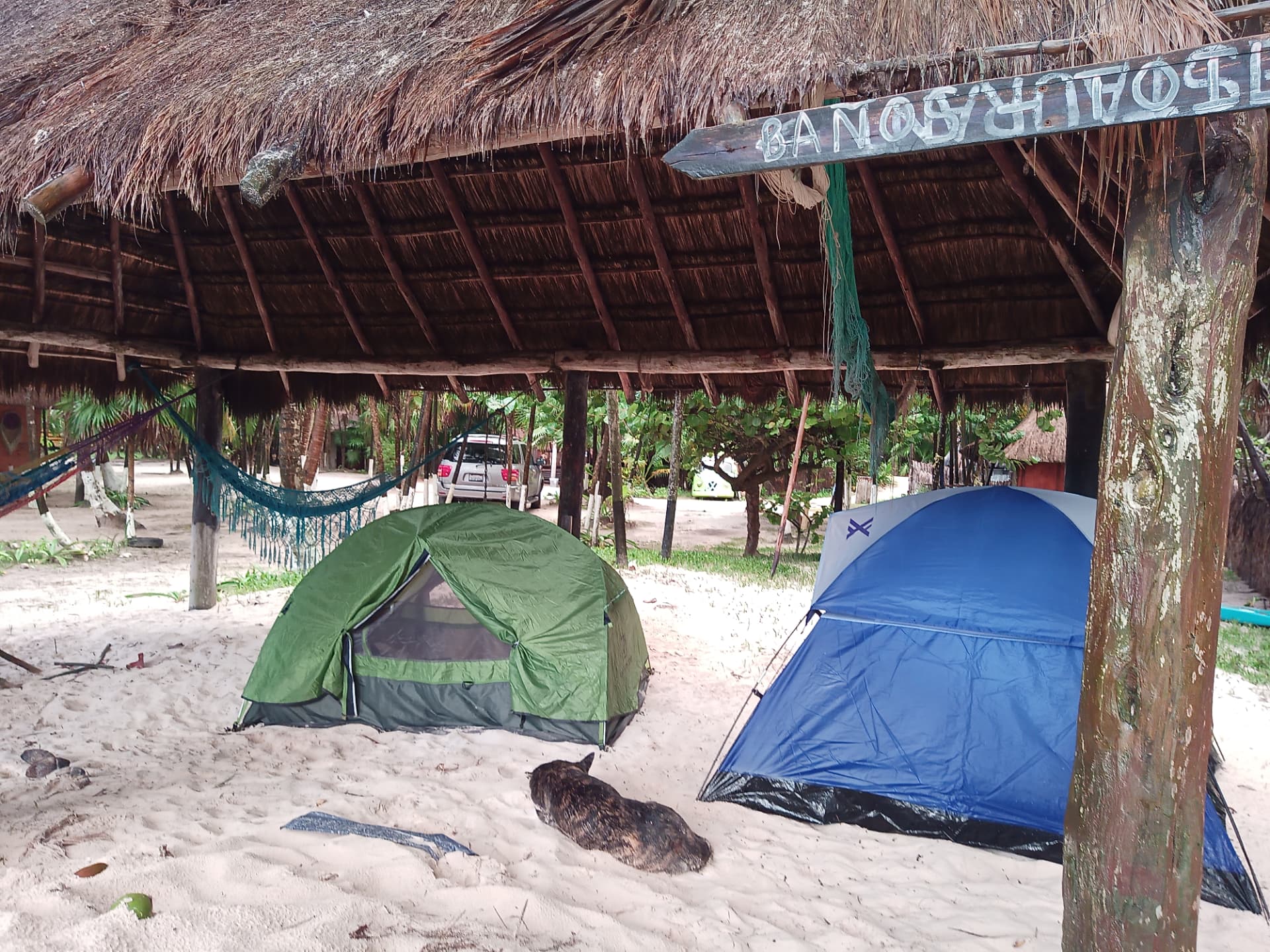
After a few days I went to visit a like-minded girl at Camping Chavez Eco Camping in Tulum.
She said I should definitely go check it out.
Now things started getting interesting.
Lower RF.
Tent or simple cabana.
Outside almost all day.
Barefoot.
Sunrise right there.
You don’t “schedule grounding” when you’re living barefoot at a campground.
You’re just grounded.
That’s another thing I eventually got tired of.
Turning every healthy behavior into another damn task.
“OK, now it’s 7:15, time for my 20 minutes of grounding.”
Or you can live somewhere where you walk outside with no shoes on.
Problem solved.
Years later I came back to Tulum under completely different circumstances.
This time I was recovering from one of the worst medical disasters of my life.
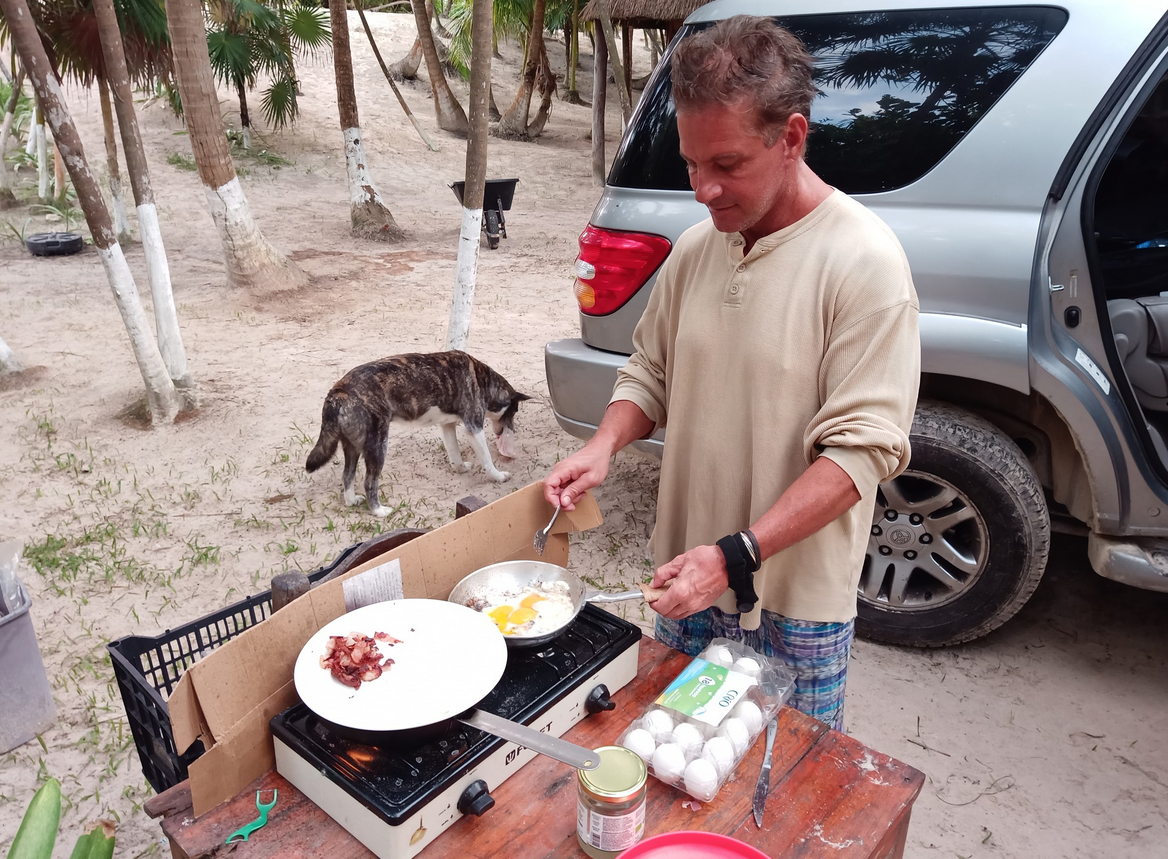
I went with my Finnish girlfriend to El Último Maya inside the reserve.
And this was a completely different world.
No Wi-Fi.
Almost no electrical infrastructure.
No nearby cell towers.
My meter barely had anything to complain about.
Beach.
Sun.
Bare feet.
Swimming.
Sunrise.
Outside all day.
Then around 6 p.m. the reserve emptied out.
Quiet.
Perfect?
For what I needed at that moment, pretty damn close.
All boxes got a check.
And this is the funny part.
Developed Tulum was only a few miles away.
Same latitude.
Same basic climate.
Completely different environment.
So much for ranking places by latitude.
Bacalar Was Beautiful. I Couldn’t Sleep.
Then there was Bacalar.
Beautiful place.
We camped right next to the lagoon.
Low RF.
Almost no electrical infrastructure.
Barefoot all day.
Sun.
Sounds great.
I slept like crap.
Why?
Trucks.
Big trucks on the highway using engine brakes all night.
Then somebody had a bright light shining across the campground.
And at that time I was still using CPAP.
No electricity.
No CPAP.
Three horrible nights.
Later I stayed in another part of Bacalar at a hotel and slept fine.
Same town.
Totally different result.
That is when I really started putting sleep near the top of the list.
You can give me great sun, an ocean, zero Wi-Fi and a perfect beach.
If I can’t sleep, forget it.
The place fails.
I Eventually Started Thinking in Levels
One problem with giving people advice about “healthy places” is that not everybody needs the same thing.
If you’re basically healthy and want to optimize your environment, that’s one situation.
If you just got out of an ICU and can barely walk around the block, that’s something else.
So I started thinking about it in tiers.
At the extreme end is what I call Recovery/Crisis.
That’s when I’m willing to make very few compromises.
Give me good sun.
Give me darkness at night.
Give me quiet.
Give me low RF.
Give me somewhere to walk barefoot.
Give me good sleep.
Keep the stress down.
Then there is a symptomatic stage where those things still matter a lot but maybe you don’t need to live in a tent next to the Caribbean.
Then prevention.
Then basic maintenance and optimization.
The important part is this:
You can move between these levels.
I have.
When I was recovering from my 2024 hospital disaster, I did not care whether a place had great restaurants.
I wasn’t checking whether there was a nice cocktail bar nearby.
I was trying to get my body functioning again.
Different problem.
Different priorities.
Latitude Matters. But It Isn’t Magic.
I still care about latitude.
A lot.
But I have become less dogmatic about it.
Here’s why.
You can move to a tropical location and spend the entire day indoors.
Close the curtains because it’s hot.
Turn on the air conditioning.
Sit at a laptop for eight hours.
Put shoes on every time you leave the house.
Drive everywhere.
Watch TV at night.
Sleep next to a router.
Congratulations.
You moved to the tropics and recreated Ohio.
On the other hand, I spent about six weeks near Farmington, Missouri in September and October 2024.
Normally Missouri would be nowhere near the top of my “healthy location” list.
Too far north.
Except it worked.
Why?
The weather was sunny.
I could be outside.
The basement where I slept was extremely dark and quiet.
RF was almost nothing.
Electric fields were extremely low.
We shut Wi-Fi off.
I spent a ton of time outside barefoot.
We even found this chilly natural stream about an hour away where I could sit in the water with full sun on me.
And I kept improving.
Meanwhile, places farther south, including Mexico, were getting hammered with hurricane Milton and other storms.
So what good is being at a better latitude if the sky is black for weeks?
That trip reminded me of something I have to keep relearning:
Reality beats theory.
Every time.
San Cristóbal Was Great—Until It Wasn’t
I ended up in San Cristóbal de las Casas almost by accident.
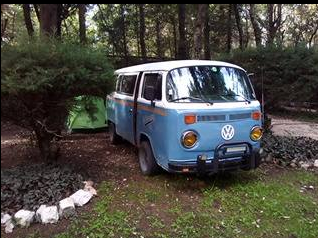
After the COVID mess I bought an old Volkswagen van and started driving around Mexico.
I found a campground on the outskirts of San Cristóbal.
It was the first post-lockdown campground I found open.
I figured I would stay a little while.
Then I met people.
Good people.
For once I found a community where I actually wanted to hang around.
So I stayed.
During the better weather it was fantastic.
Cooler.
Beautiful.
Interesting people.
Then I went back during winter because I missed my friends.
Bad idea.
Cold.
Cloudy.
Long pants.
Shoes.
Jacket.
Less barefoot time.
Less skin exposed to sun.
Less morning sun.
Sometimes I would see blue sky and think, OK, go now before it’s gone.
I still love San Cristóbal.
I would go back.
But not blindly at any time of year.
“Mexico” does not automatically mean “sunny tropical environment.”
San Cristóbal cured me of that idea.
Puerto Escondido Became One of My Reliable Sun Stops
Puerto Escondido is different.
When I need sun, Puerto has always delivered.
Not every part of town.
It can be loud at night, especially around the popular Zicatela beaches.
RF in town can be ugly.
It gets brutally hot.
I get fresh oysters on the beach at Playa Manzanillo.
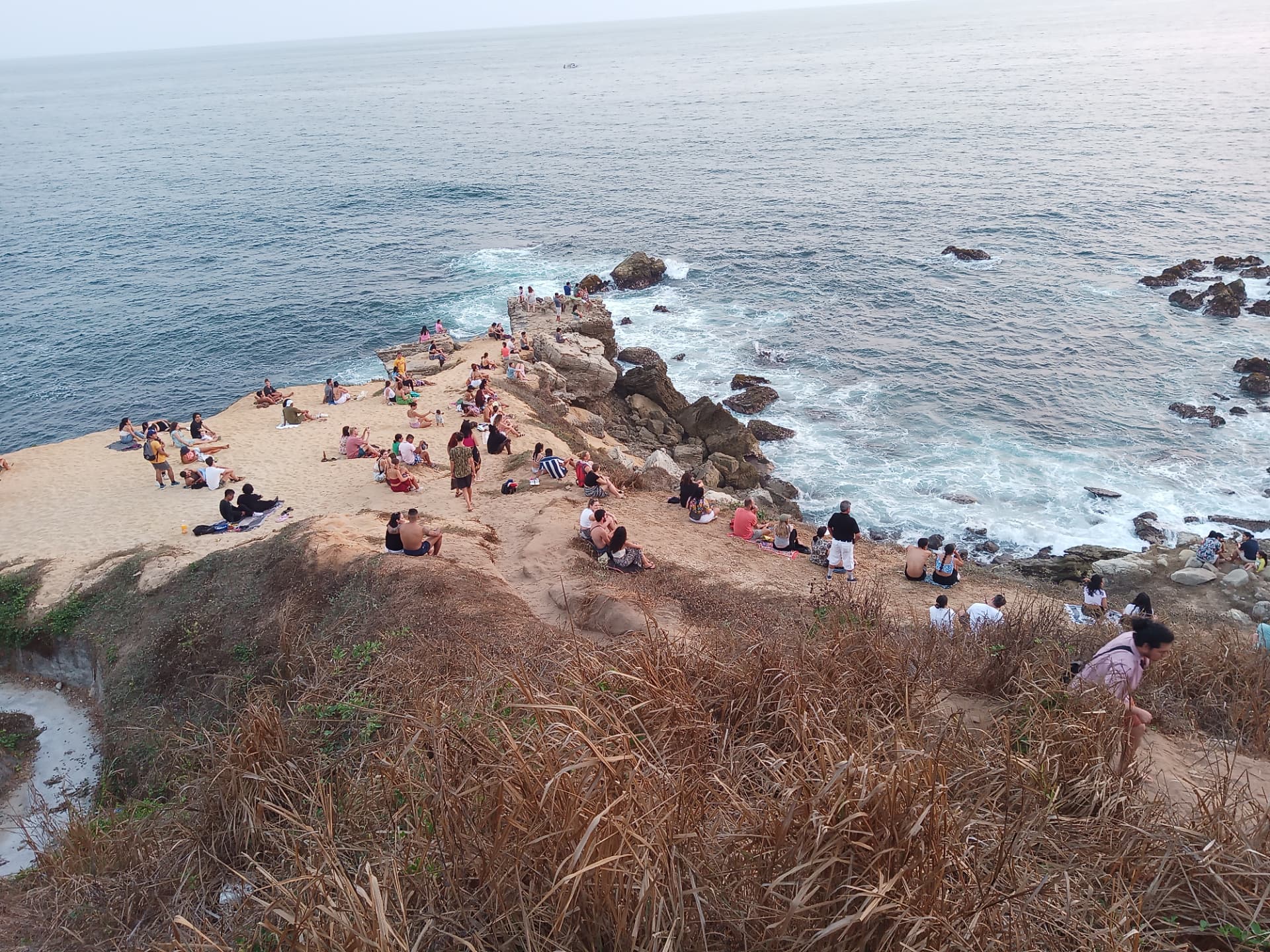
But Playa Bacocho became one of my favorite places.
Big beach.
Lots of room.
Easy sun.
Easy barefoot time.
Pacific Ocean.
Simple.
And this is where the story gets more interesting because I finally found the lab reports I had been looking for.
I Finally Found the Damn Lab Reports
For years I remembered something that sounded almost too neat.
My vitamin D went up about 40 points.
My cholesterol went down about 40 points.
I remembered it because the numbers were almost identical.
Then I started working on this article and the scientific paper based on the same experience, and I thought:
I really need to find those labs.
Turns out I remembered the numbers almost perfectly.
I just had the timeline wrong.
Which is exactly why keeping records matters.
On January 30, 2024, while I was still in the United States, the VA measured my vitamin D at:
47.1 ng/mL
My total cholesterol was:
316 mg/dL
Those are documented VA results.
Ten days later I went through the hospital disaster I’ll explain in a minute.
After I eventually got well enough to leave the United States, I went back to Mexico.
On April 11, 2024, in Puerto Escondido:
Vitamin D: 68.57
Total cholesterol: 307
That’s on the actual lab sheet.
Then on June 7, 2024:
Vitamin D: 87.40
Total cholesterol: 276
Also documented.
So here is what actually happened:
January 30 — Vitamin D 47.1, Cholesterol 316
April 11 — Vitamin D 68.57, Cholesterol 307
June 7 — Vitamin D 87.40, Cholesterol 276
Do the math.
Vitamin D went up:
40.3 points.
Total cholesterol went down:
40 points.
That’s the pattern I remembered.
Now, does that prove the sun caused my cholesterol to drop?
No.
A lot was going on.
I had just survived a medical catastrophe.
My activity changed.
My food changed.
My environment changed.
My body was recovering.
The tests were also done in different laboratories.
So I am not going to pretend this was some perfect experiment where I changed one variable and locked everything else in a box.
It wasn’t.
But come on.
It’s an interesting pattern.
And now I have the actual lab reports.
More importantly, I have three measurements, not just one “before” and one “after.”
Vitamin D kept moving one direction.
Cholesterol kept moving the other.
That got my attention.
Vitamin D (ng/mL) vs. total cholesterol (mg/dL)
January 30, 2024 — USA
VA lab result
Vitamin D 47.1
Cholesterol 316
April 11, 2024 — Puerto Escondido
Vitamin D 68.57
Cholesterol 307
June 7, 2024 — Mexico
Vitamin D 87.40
Cholesterol 276
And I will make the actual lab reports clickable underneath for anybody who wants to see them.
I don’t expect people to take my word for it.
That’s why I like having the paperwork.
The CPAP Story Is Even Stranger
I had sleep apnea for years.
This isn’t something I diagnosed myself.
I have the VA record.
My March 2, 2014 sleep study showed an untreated AHI of 8.4, oxygen dropping to 88%, and my weight at the time was 210 pounds.
With PAP treatment, AHI dropped to 2.5 and oxygen improved to 91%.
So yes.
I had sleep apnea.
Then I moved to Mexico.
Eventually I became extremely thin.
Friends were telling me I looked too skinny.
Guess what?
I still had trouble sleeping without CPAP.
That’s important because the obvious answer would be:
“Oh, you lost weight. That’s why the apnea went away.”
Except it didn’t go away when I got skinny.
I was skinny and still needed the machine.
Years earlier Jack Kruse had told me that after enough time living in the tropics he thought my CPAP need might eventually change.
His explanation had to do with brainstem respiratory regulation and epigenetic changes.
Now before somebody emails me screaming that tropical living has not been proven to cure sleep apnea:
Correct.
It hasn’t.
I know.
I’m telling you what happened to me.
After living in Acapulco for somewhere around eight or nine months, I started accidentally falling asleep without putting the CPAP on.
Normally I would know the next morning.
This time I didn’t.
I felt about the same.
That got my attention.
So a doctor ordered a home sleep study.
I specifically remember the result:
AHI 5.
I was told I no longer needed CPAP.
So I stopped using it.
And here’s the interesting part.
I have never started using it again.
Not for a week.
Not for six months.
Years.
I have now emailed the doctor in Acapulco who ordered that study and asked him if he can find the report.
So before I publish this article I am waiting to see what he sends me.
If he finds it, great.
Then I’ll put the exact report here.
If he can’t, I will leave this exactly as what it is:
My recollection of the test, plus the documented fact that I had sleep apnea before and my report that I stopped CPAP afterward and never went back.
Then Acapulco Got Destroyed
Living in Acapulco taught me another lesson.
A place can work great.
Then the place changes.
Fast.
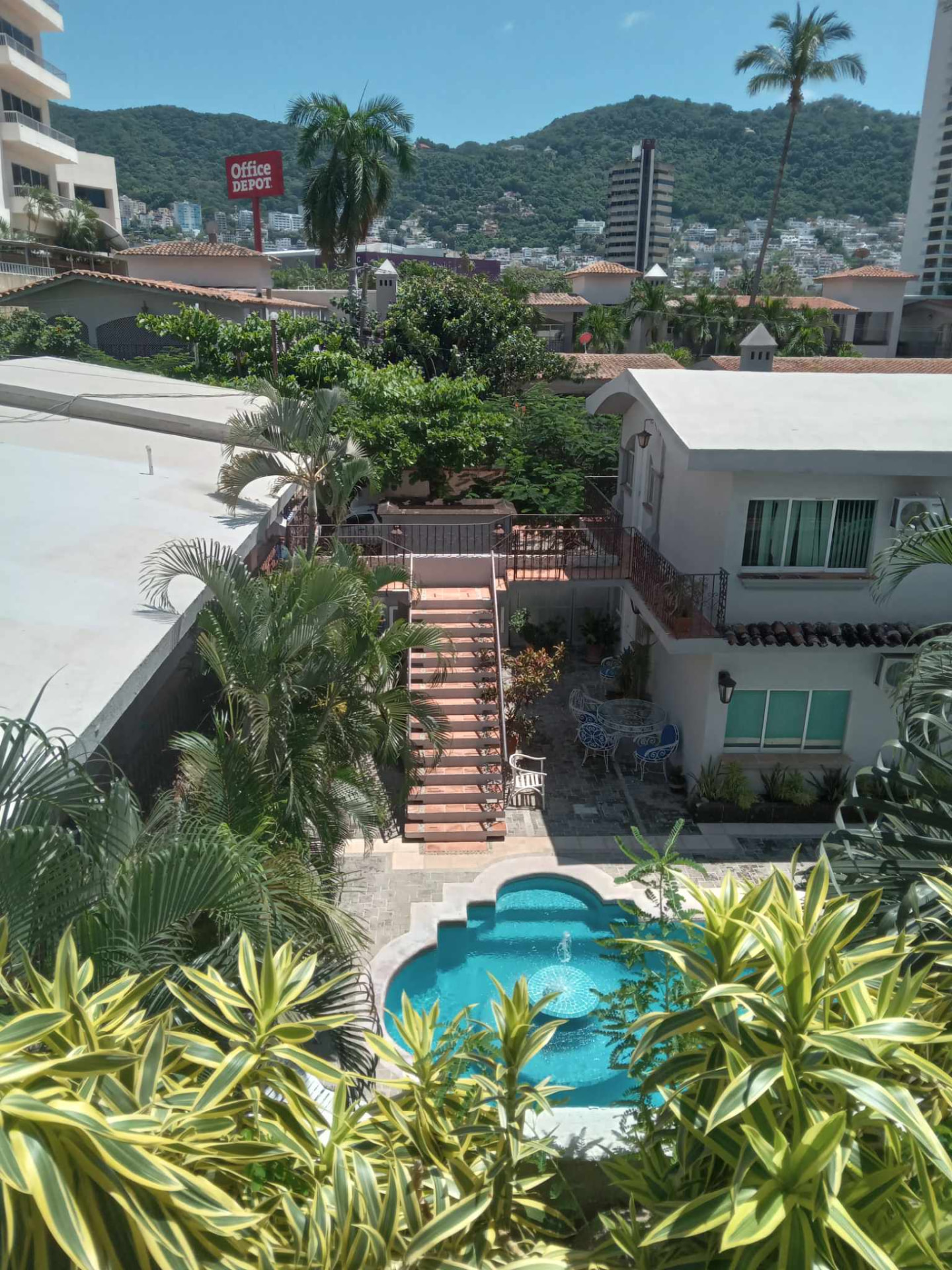
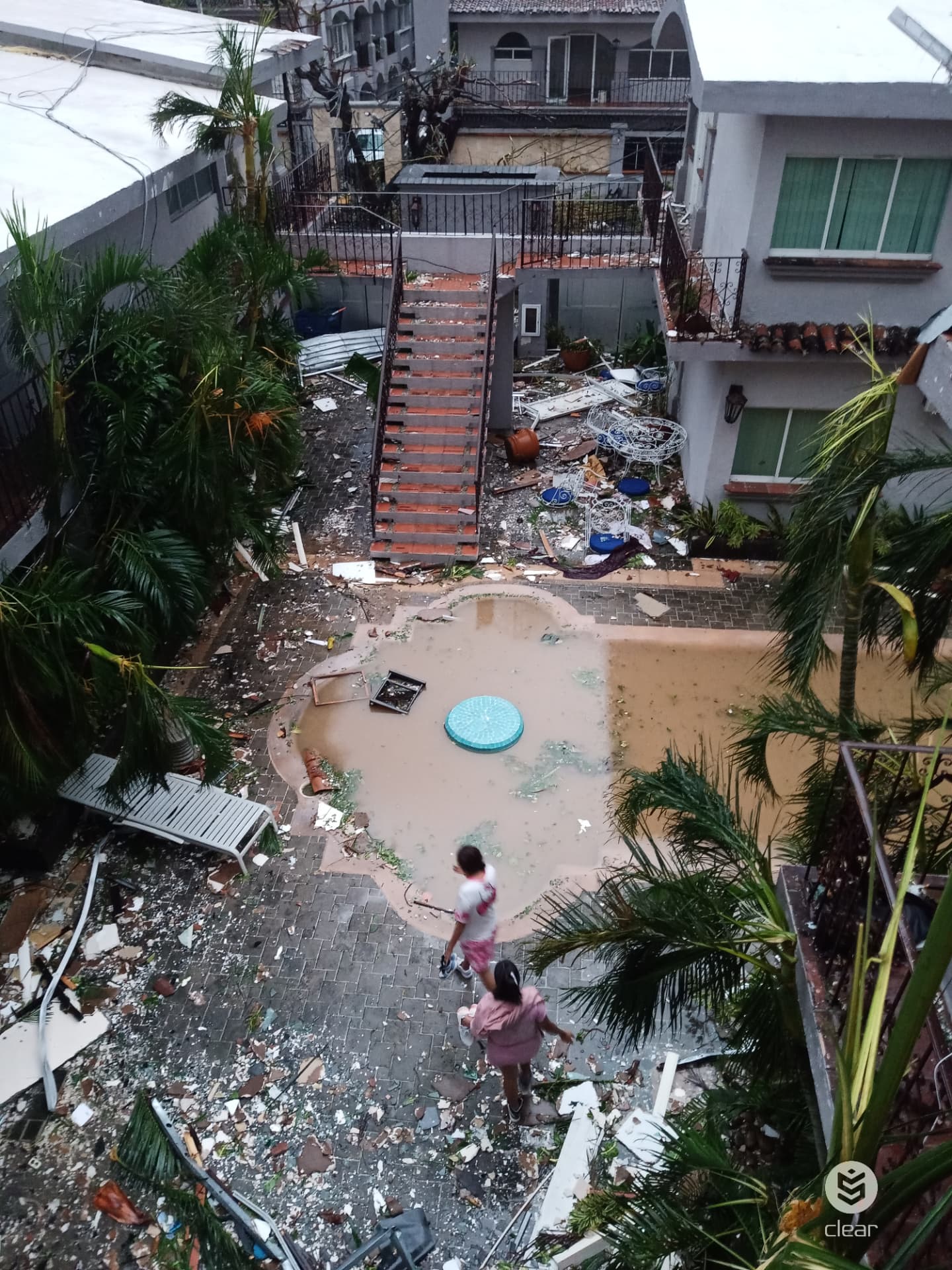
Hurricane Otis hit Acapulco while I was living there.
I filmed it and put it on YouTube.
You can see what it was like inside my condo during the middle of the hurricane that wiped out Acapulco.
Before the storm I had no plan to leave.
Afterward?
Different universe.
Power poles down.
Wires everywhere.
Windows blown out.
No water.
Stores stripped.
Infrastructure wrecked.
About half the windows in my condo were gone.
Eventually a friend’s sister drove down from Mexico City in an SUV full of supplies.
I rode back with her.
This is another reason these goofy “Top 10 Healthiest Places to Live” articles drive me crazy.
A place is not a static object.
Weather changes.
Development changes.
Cell towers appear.
Neighbors change.
Noise changes.
Healthcare changes.
You change.
Acapulco before Otis and Acapulco after Otis were not the same place.
Then I Nearly Died
After I got back to the United States my health situation got much worse.
My legs swelled up horribly.
I had extensive blood clots.
I eventually underwent a procedure involving an old IVC filter.
I expected this to be relatively straightforward.
It was not.
Something went badly wrong.
I ended up bleeding internally.
A lot.
And I don’t mean a little bruising.
The February 9 CT showed active bleeding from my inferior vena cava near the bottom of the IVC filter, with blood extending into the retroperitoneum.
The hospital record later listed both hemorrhage and acute blood-loss anemia.
I ended up intubated.
Complete blood transfusion.
Emergency procedures.
ICU.
About 12 nights in the hospital.
And my abdomen became enormous.
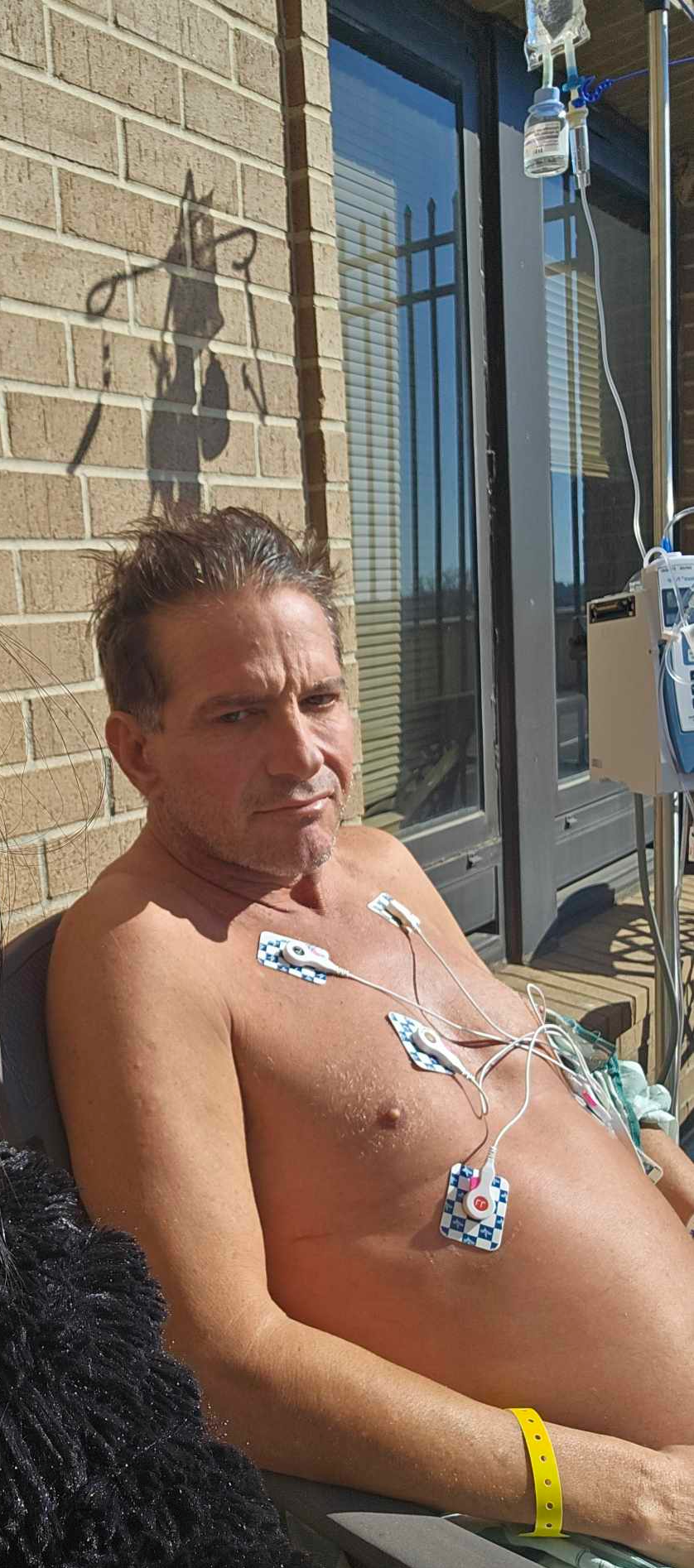
No, That Is Not My Normal Belly
I want to explain one of the hospital photos because otherwise somebody is going to look at it and think:
“Wow, he gained a lot of weight.”
No.
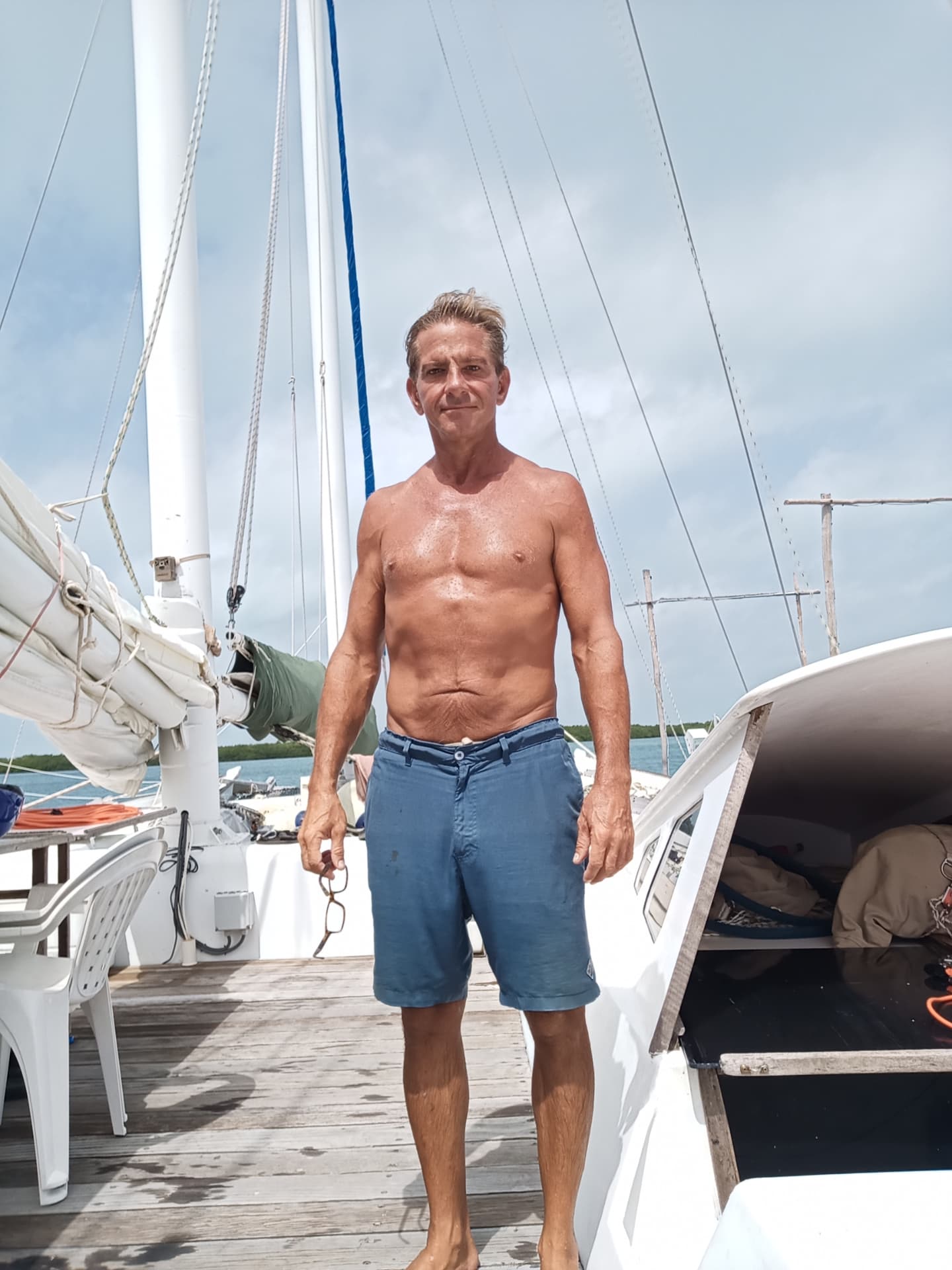
Look at the rest of me.
I was thin.
The belly was from the internal bleeding and hematomas.
By February 15 there was still a hematoma measuring about 5.5 × 11 centimeters.
The radiologist specifically wrote that it was compressing and pushing my pancreas and small bowel forward. There were other large hematomas in there too.
There was also fluid in the abdominal cavity that the report described as suggestive of hemoperitoneum—blood in the abdomen.
That’s why I looked like that.
It felt like somebody had shoved a sack of potatoes inside my abdomen.
I could barely eat.
A spoonfull of food and I was full.
Walking a short distance was exhausting.
And yes, I look absolutely miserable in the hospital photo.
I was.
I also had breathing problems.
The CT documented obstructive atelectasis (collapse) in the lower left lung and pleural fluid.
At the time I felt like I couldn’t move my diaphragm normally because my abdomen was so damn huge.
Now here’s where I am careful.
The CT report did not say the abdominal pressure caused the lung finding.
It associated the obstructive atelectasis with material obstructing the airways.
So those are two separate things.
What the scan showed and what I physically felt.
I don’t need to exaggerate it.
The real story is crazy enough.
All I Wanted Was to Get Outside
Once I could walk again, I wanted sun.
I asked if somebody could take me outside in a wheelchair.
Nope.
Not enough staff.
So eventually I found a door at the end of the sixth-floor hallway that went out to a balcony.
Perfect.
I started taking myself out there with my IV.
It was February.
Cold.
But if the sun came out I pulled my shirt up, exposed that ridiculous giant belly and sat there.
And I started noticing something.
The days when I got outside seemed to be better days.
I noticed the same thing later at my sister’s house.
Now am I telling you the sun magically fixed a ruptured vein and massive internal hemorrhage?
Of course not.
My body was healing.
Blood was being reabsorbed.
Time was passing.
I still could not eat but soon discovered I could put down a smoothie.
Walking.
Recovering.
But I felt better when I got outside.
That’s what happened.
Then I Got Back to Mexico
It took a while before I was even strong enough to deal with airports.
Eventually I got back to Isla Mujeres because I knew people there.
And of course the weather sucked.
Clouds.
Rain.
Storms.
Seriously?
I had just dragged myself back to the tropics because I wanted sun.
So I checked Puerto Escondido.
Sunny.
OK.
I’m going.
This is where the lab numbers start making sense in the timeline.
Ten days before the February hospital procedure my vitamin D was 47.1.
April 11 in Puerto Escondido:
68.57.
June 7:
87.40.
Again, I cannot tell you how much of that was sun versus diet versus recovery versus everything else.
But that’s why I test.
I like numbers.
Then Came the Ten Days in Tulum I Will Never Forget
My recovery was moving along.
Slowly.
Then my Finnish girlfriend came down and we went to the Tulum reserve.
El Último Maya.
About ten days.
No Wi-Fi.
Almost nothing on my RF meter.
Barefoot.
Beach.
Sunrise.
Ocean.
Outside almost all day.
Quiet at night.
Sleep.
Basically take all the things I wanted and put them in one location.
Before I went there I could walk around Isla Mujeres and start feeling like I was running out of juice.
Weak.
Drained.
Sometimes like I might faint.
Then I spent those ten days living outside.
Within a couple of days I started noticing more energy.
When we went back to Isla Mujeres I could walk around without that same drained feeling.
The difference was obvious to me.
Those ten days felt like months of recovery.
Was it the sun?
Grounding?
Ocean?
No RF?
Sleep?
Being outdoors?
Time?
All of it?
I have no idea.
And that’s actually one of the main points of this whole article.
People want one magic variable.
I don’t think it works that way.
Environment is a package.
Sometimes you change the whole package and your body responds.
Isla Mujeres Was Great Physically—and Sometimes Terrible Socially
I spent a lot of time on Isla Mujeres.
There is plenty I love about it.
Good beaches.
Less sargassum than a lot of the Caribbean coast.
Easy morning sun.
Fish.
Swimming.
People I knew.
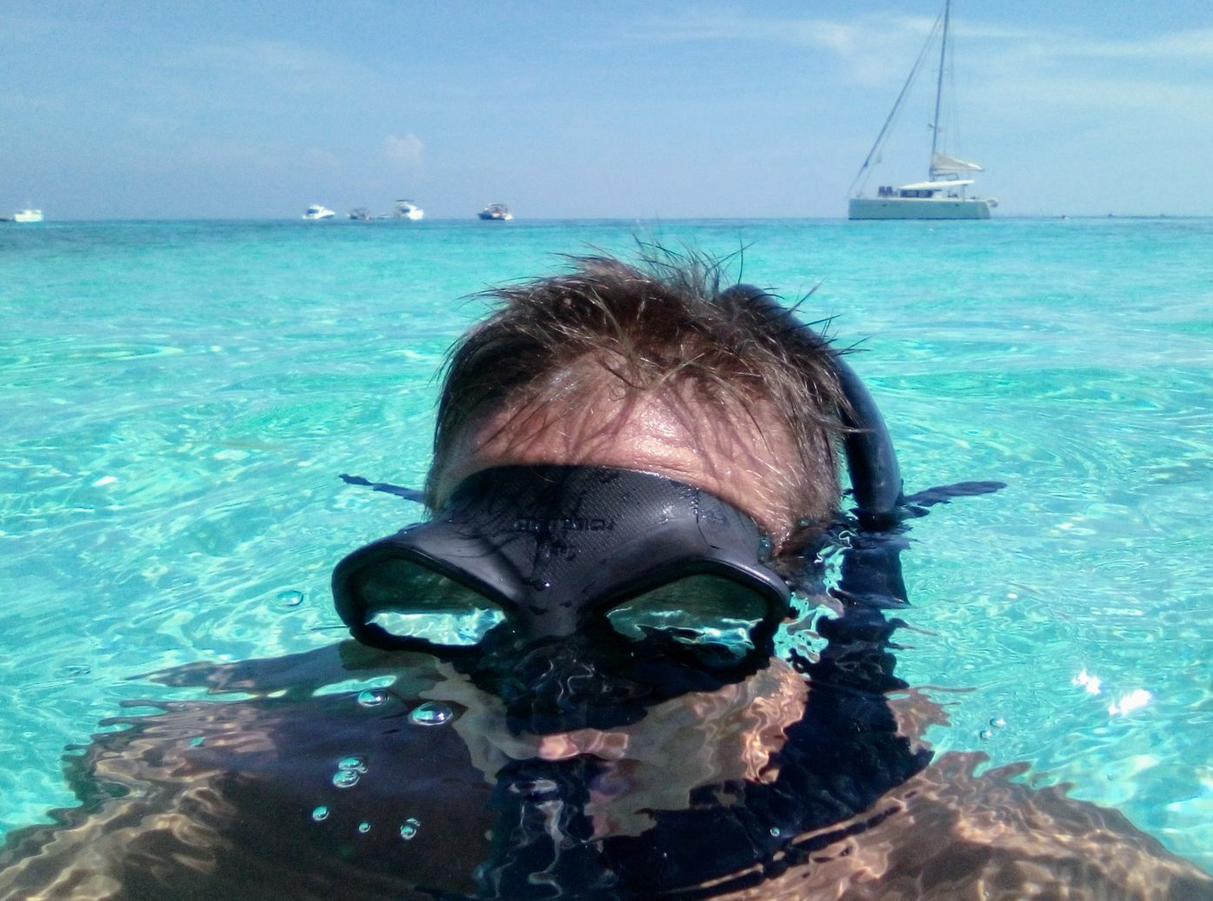
At one point I lived on a sailboat.
And yes, I tested the boat.
Below deck RF could be very low.
Stick the meter up through the hatch during the day and it could change immediately.
Location within a location.
Again.
But Isla had another problem.
Socially, it could get lonely.
It’s a vacation island.
People arrive.
They drink.
They leave.
I was living there.
There’s a difference.
And over the years that started mattering more.
Then I Found Ometepe
Eventually I ended up on Ometepe Island in Nicaragua.
Physically, this might be one of the better places I have lived.
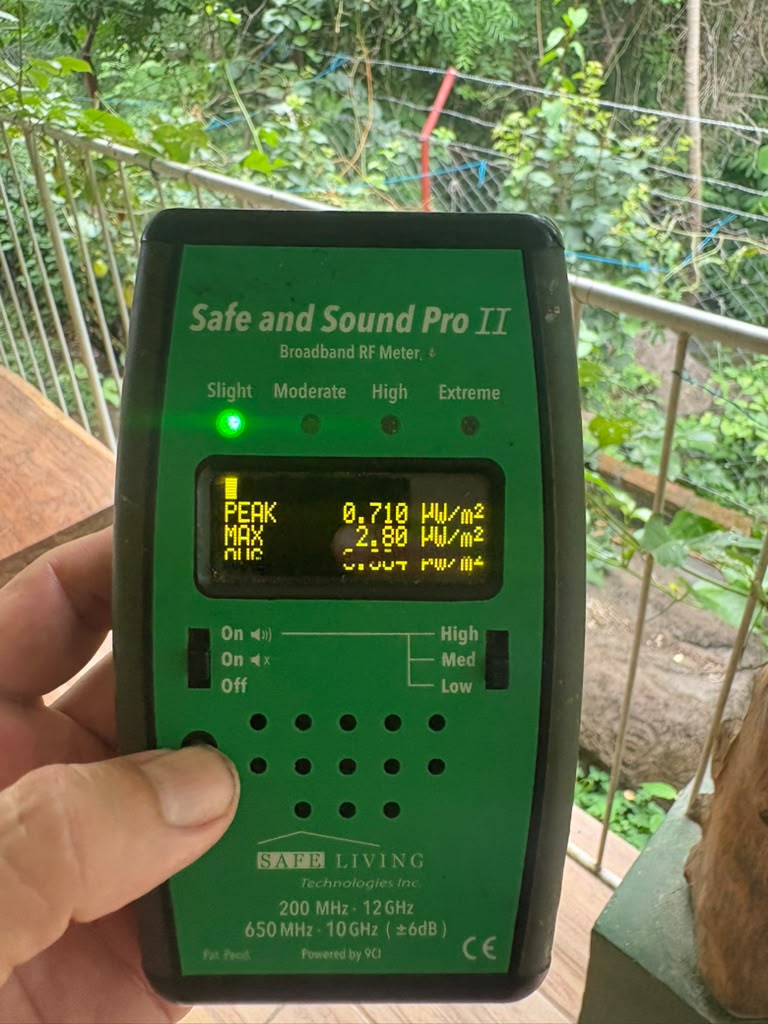
Around my house I have found extremely low RF readings.
Walk outside barefoot and you’re grounded.
It gets very dark at night.
You can see all the stars.
It can be very quiet.
Sun is not hard to find.
So is Ometepe the healthiest place I have ever lived?
Here we go again.
No.
Because it has problems.
Heat.
Humidity.
Some nights are too hot.
Healthcare is limited.
If something serious happens you’re dealing with a ferry and travel to bigger hospitals.
And then there is the issue I never thought would become so important.
Isolation.
There are not that many people here.
A lot of the expats are couples and families.
Dating?
Good luck.
And I work online.
So what happens if I am bored and isolated?
I sit on the computer more.
Think about that.
I can move to a place with fantastic sun, low RF, darkness, grounding and nature...
...and then sit inside staring at a screen because I’m lonely.
Is that healthy?
No.
That is why my definition of a healthy location changed.
A Healthy Environment Has to Support a Healthy Life
This may be the biggest change in my thinking.
Years ago I was obsessed with the physical environment.
Sun.
RF.
Grounding.
Artificial light.
Electric fields.
All important.
I still care about all of them.
But what about friends?
What about a relationship?
What about having something to do?
What about medical care?
What about actually enjoying your life?
You can optimize yourself into misery.
I’ve done it.
A friend, introducing me to his friends, added “He’s in a health cult”
It can drive your friends crazy too.
So now I ask a different question.
Not:
What location has the best numbers?
But:
Can I build a healthy life here?
Huge difference.
What I Actually Check Before I Rent a House
I don’t just walk into a house anymore and say, “Oh this is nice.”
I bring meters.
For RF I use Safe and Sound Pro 2 meters.
For electric and magnetic fields I use a TriField TF2.
I also check dirty electricity.
The bedroom gets the most attention.
Because I am going to spend about a third of my life lying there unconscious.
I want the Wi-Fi off at night.
I don’t want giant electric fields coming from the wall beside my head.
I want darkness.
I want quiet.
I want the room cool enough to sleep.
And when I say cool enough, I have learned that if the bedroom stays above about 85 degrees all night I am going to sleep badly.
That’s a deal breaker.
I have my own conservative meter numbers I prefer.
Those are my screening numbers.
I am not claiming everybody on Earth has to use the exact same cutoffs.
The important thing is I measure before I sign a lease.
Because after you move in is a terrible time to discover the tower next door.
The Easiest Way to Waste a Great Location
Move somewhere healthy and then refuse to use it.
This happens constantly.
People move to a beautiful tropical location.
Then they stay inside because it’s hot.
Air conditioning all day.
Phone in the face.
Laptop all day.
Shoes on.
Curtains shut.
Lights on at night.
Netflix until midnight.
Router two feet from the bed.
Then:
“This tropical thing doesn’t work.”
Well...
Did you actually live in the tropical environment?
Or did you build a little artificial box inside it?
For me this stuff works best when it becomes normal life.
Go outside in the morning.
Be barefoot.
Get sun.
Swim.
Eat outside.
Work outside when possible.
Turn unnecessary wireless stuff off at night.
Keep the bedroom dark.
Go to sleep.
It does not need to become another full-time job.
And Don’t Forget Healthcare
This one became more important after almost dying.
Routine healthcare in Mexico and Nicaragua can actually be incredibly convenient.
Labs are a perfect example.
I can walk into a lab and say I want vitamin D, cholesterol, whatever.
Pay.
Done.
No begging somebody for permission to test my own blood.
Dental work can be easy.
Basic imaging can be easy.
Emergencies are another story.
When things go really wrong, access matters.
A lot.
Ometepe is a good example.
Great natural environment.
But if I need serious emergency care I’m on an island.
That matters more to me at 58 than it did when I was younger.
Your healthy location has to match your actual medical situation.
What Would I Tell Myself Back in 2018?
I would still move to Mexico.
Absolutely.
I would still camp in Tulum.
I would still discover San Cristóbal.
I would still live on Isla Mujeres.
I would still chase sun to Puerto Escondido.
I would still end up in Nicaragua.
But I would tell myself:
Quit trying to find the perfect place.
It doesn’t exist.
Measure things.
Learn.
Experiment.
Pay attention to your body.
Keep records.
And most importantly, be willing to change your mind when the evidence changes.
Finding those old lab reports was a great example.
For years I remembered:
Vitamin D up 40.
Cholesterol down 40.
And guess what?
I was almost exactly right.
But I had the timeline wrong.
So the records corrected me.
Good.
That’s what records are for.
I’m not trying to prove myself right.
I’m trying to figure out what happened.
So What Is a Healthy Location?
For me?
It’s a place where I can get enough useful sun.
Sleep well.
Get outside easily.
Be barefoot without making an event out of it.
Keep wireless and electrical exposures at levels I am comfortable with.
Sleep in darkness and quiet.
Avoid cooking myself all night in a hot bedroom.
Reach decent medical care if I actually need it.
And have enough of a social life that I don’t turn into a hermit sitting on a laptop.
Does any place give me all of that perfectly?
Nope.
That’s the point.
I stopped looking for:
“The healthiest place in the world.”
Now I look for:
The healthiest tradeoff for me right now.
And that answer changes.
The location I needed while recovering from catastrophic internal bleeding is not necessarily the location I need when I am healthy and looking for community.
Your answer is going to be different too.
Which is why when somebody asks me:
“Where should I move?”
I don’t immediately start naming countries.
I start asking questions.
What’s going on with your health?
How well do you sleep?
Do you tolerate heat?
What season are you going?
How much sun can you realistically use?
Do you need a major hospital nearby?
Can you work from anywhere?
Do you have a family?
Do you want total isolation or will you go crazy after three weeks?
What does the actual house measure like?
That is what eventually became the idea behind Healthy Latitude.
I’m not selling real estate.
I’m not telling everybody to move to Nicaragua.
And I am definitely not making another stupid “10 healthiest places to retire” list.
I help people look at the environment they are actually going to live in and figure out which variables matter most for them.
Because after eight years of moving around, testing houses, living in tents and boats, chasing sunlight, collecting lab results, surviving hurricanes and nearly dying in a hospital, this is the conclusion I keep coming back to:
There is no healthiest location.
There is only the question:
Is this environment helping you build the healthiest life you realistically can?
Trying to figure out where you would actually do better?
A Healthy Location Strategy Session is a one-on-one look at your current health situation, lifestyle, climate preferences, sunlight, sleep environment, electrical and wireless exposure, healthcare needs and the places you’re considering.
I strongly advise against buying anything the first year you arrive. I’m not here to sell you a house or steer you toward somebody else’s idea of paradise.
I’m here to help you look at the environment you would actually live inside every day.