From the Healthy Latitude Journal
Best Places to Live in Costa Rica: What Most Expat Guides Overlook
After years of traveling between Nicaragua and Costa Rica, I've learned that choosing a place to live involves a lot more than beautiful beaches, tropical scenery, and the famous Pura Vida lifestyle.
David Key, QBP
ANMCB-certified practitioner and founder of Healthy Latitude
October 11, 2026
Search Google for the best places to live in Costa Rica and you'll find plenty of lists.
Tamarindo.
Jacó.
Escazú.
Atenas.
Puerto Viejo.
The Central Valley.
And of course, endless descriptions of beautiful beaches, tropical wildlife, lush rainforests, and the Pura Vida lifestyle.
All very nice.
But what about the cost of actually living there?
Getting around?
Finding a quiet place to sleep?
Having reliable transportation?
Or discovering that the beautiful tropical destination you're considering gets so much rain that you rarely see the morning sun?
I've been visiting Costa Rica regularly for years, mostly traveling through the country by bus from Nicaragua, where I live.
I haven't lived in Costa Rica full-time, and I'm not going to pretend I've explored every corner of the country.
But I've spent enough time there to learn some things that most relocation guides never mention.
And some of my most useful discoveries weren't beaches or tourist attractions.
They were bus stations, shopping centers, affordable hotels, and the difference between staying in a quiet room and one where the beach bar keeps you awake.
These things might not sound exciting.
But if you're thinking about living somewhere permanently, they matter.
Costa Rica Is Beautiful. But Is It the Right Place for You?
Before talking about specific places, there's something I want to make clear.
There's no single best place to live in Costa Rica.
A retired couple wanting easy access to medical care might have completely different priorities than somebody who wants to live in a cabin near the beach.
Some people love warm, humid weather.
Others can't stand it.
Some people want restaurants, shopping, and plenty of social activity.
Others would rather live somewhere they can barely see another house.
I tend to pay attention to environmental conditions that most relocation guides overlook.
Sunlight.
Air and water quality.
Noise.
Artificial lighting.
Electrical and wireless exposures.
Access to nature.
And the conditions that affect sleep.
But the practical side of living somewhere matters just as much.
Transportation, food prices, reliable infrastructure, and access to services can make an enormous difference in how much you enjoy your daily life.
Costa Rica has plenty of attractive places.
The challenge is figuring out which environment actually works for you.
Why I Often Fly Through Costa Rica Instead of Nicaragua
One of the main reasons I spend so much time traveling through Costa Rica is airfare.
I live in Nicaragua, but I've frequently found flights from Costa Rica that cost about half as much as comparable flights departing Nicaragua.
That's a substantial difference.
So instead of flying out of Nicaragua, I'll often take a bus across the border and fly out of either San José or Liberia.
Both airports have their advantages.
San José usually offers me a wider selection of international connections, and I've often found the lowest airfares there.
But there's a catch.
It's considerably farther from where I live in Nicaragua.
And with the highway construction I've encountered in Costa Rica, that extra distance can turn into several additional hours sitting in traffic.
Liberia, on the other hand, is much closer to the Nicaragua border.
That makes it extremely convenient for me.
I've used Liberia repeatedly for international flights, often spending a night in town before departing or after returning.
The airfare savings have to be weighed against the cost and inconvenience of reaching the airport.
Sometimes San José wins.
Other times, the convenience of Liberia is worth considerably more to me than a slightly cheaper ticket.
And that's something people thinking about moving abroad should consider.
How easy is it to travel in and out of the place you're planning to live?
If you visit family overseas, travel frequently, or simply want access to affordable international flights, that can make a significant difference.
Alajuela: The City Next to San José Airport That Surprised Me
One of the most useful discoveries I've made traveling around Costa Rica was Alajuela.
Most people flying into San José probably assume they need to go into San José itself.
But Juan Santamaría International Airport, commonly called San José Airport (SJO), is actually in Alajuela.
And downtown San José can be over an hour away by taxi when traffic is bad.
Why go through all that if you don't have to?
I've stayed in Alajuela several times and found that it has pretty much everything I want.
There's plenty of shopping.
Good restaurants.
And some surprisingly upscale shopping and dining areas.
I wasn't expecting quite that much development.
But the discovery that really made Alajuela valuable to me was the Radial bus station.
The Radial Bus Station: My Favorite Transportation Discovery
Since I regularly travel between Nicaragua and Costa Rica, I generally get around by bus.
And finding the Radial bus station in Alajuela made traveling north a lot easier.
It's close to the international airport, although you'll still need to get from the airport to the station itself.
The important thing is that you don't have to travel all the way into downtown San José just to catch a bus heading north toward Liberia.
That saves time, money, and a lot of unnecessary hassle.
I even made a video showing the route from Alajuela to Liberia and explaining how to use the Radial bus station.
My fare was only 4,785 colones.
That's pretty inexpensive for a trip of that distance.
For me, Alajuela offers a combination that's hard to beat.
An international airport nearby.
Good shopping.
Plenty of restaurants.
Convenient public transportation.
And no need to deal with downtown San José unless I actually want to go there.
Now, I haven't lived in Alajuela permanently, so I wouldn't pretend to know everything about its neighborhoods, noise, air quality, or long-term housing market.
But from my repeated visits, it's certainly somewhere I'd investigate further.
It might not have the tropical beaches people associate with Costa Rica.
But sometimes practical convenience is worth more than another pretty beach.
Liberia: A Practical Gateway to Nicaragua and International Travel
Liberia is another place I've gotten to know through repeated visits.
Since I live in Nicaragua, Liberia is often the most convenient place for me to catch an international flight.
Guanacaste Airport (LIR) is just outside Liberia.
And compared with traveling all the way to San José, getting there from the Nicaragua border is much easier.
I usually spend a night or two in Liberia when flying in or out.
And I've found it to be a pretty convenient town.
There are good restaurants.
A Walmart.
Plenty of shopping and services.
And more commercial development than you'll find in many parts of Nicaragua.
That's something I notice whenever I cross the border.
But there's another thing I notice.
The prices.
Costa Rica Is Not Nicaragua When It Comes to Prices
Food, restaurants, and many everyday purchases in Costa Rica are considerably more expensive than what I'm accustomed to paying in Nicaragua.
Liberia is no exception.
But that doesn't mean everything is expensive.
I've found reasonably priced rooms in Liberia, particularly when I'm just looking for somewhere comfortable to sleep before an early flight.
And public transportation remains surprisingly affordable.
So I can spend a night in town, enjoy a good meal, and catch my flight without spending a fortune.
Of course, if I were living there permanently, I'd want to investigate the neighborhoods, long-term rental prices, heat, noise, and other conditions more carefully.
But Liberia has some advantages that are easy to overlook if you're only looking at the usual lists of Costa Rica's best beach towns.
It's practical.
It's developed.
And for somebody who travels frequently between Costa Rica and Nicaragua, its location is hard to beat.
San José vs. Liberia: Which Airport Is Really More Convenient?
People often compare airline ticket prices without thinking about how much time and money it takes to reach the airport.
For me, that can be a major factor.
San José generally offers more international connections, and I've often found cheaper flights there.
But traveling between Liberia and San José takes several hours by road.
And the highway construction I've encountered can make that journey longer and considerably more frustrating.
If I find a flight from San José that's only a little cheaper than one leaving Liberia, I'm probably going to choose Liberia.
I'd rather spend that extra time doing something useful than sitting in traffic.
But if San José offers a substantially cheaper ticket or a much better flight connection, that's another story.
Taking the Bus Between Liberia and San José
The bus between Liberia and San José has cost me about 5,000 colones ($10 USD).
And unlike traveling to Jacó from northern Costa Rica, you don't need to change buses in Puntarenas.
It's a direct trip.
The bus does stop along the way for approximately 20 minutes, giving passengers a chance to use the restroom, grab something to eat, and stretch their legs.
I appreciate that because it's a fairly long ride.
And when you're traveling on a budget, 5,000 colones is a lot more appealing than paying for private transportation.
Another Option: Flying Between San José and Liberia
If you don't feel like spending several hours on a bus, there's another option.
SANSA Airlines operates flights between San José and Liberia.
The flight itself takes roughly 50 minutes.
One-way fares I've found range from approximately $108 to $190, depending on the date and availability.
That's considerably more expensive than the bus.
But depending on how much time you have and how bad the road delays are, it might be worth considering.
Of course, you still have to account for airport check-in, security, and collecting your luggage.
Personally, I don't mind taking the bus.
But if I needed to avoid several hours of road travel, I'd certainly compare the options.
The larger point is that transportation matters.
If you're considering a place to live, don't just evaluate what's nearby.
Evaluate how easily you can reach the places you regularly need to go.
Jacó Beach: Sometimes the Rainy Season Is the Better Deal
Best suited for: People who enjoy an active Pacific beach town, restaurants, and easy access to the ocean—and don't require sunshine all day.

I've visited Jacó Beach twice for short vacations.
One thing I've learned is that when you go makes an enormous difference, especially when it comes to finding a place to stay.
During the high season, hotels can be booked solid.
And the reasonably priced rooms?
Good luck finding one.
Even if you're willing to spend more than $200 a night, you might still have trouble finding a room.
But during the off-season, it's a completely different situation.
Hotels are much easier to find, and the prices can be considerably more reasonable.
Sure, you might get some rain.
Or clouds.
And it might not be sunny all day, every day.
So what?
I don't need twelve hours of uninterrupted sunshine to enjoy spending time at the beach.
And I'd certainly rather save a substantial amount of money than pay ridiculous hotel prices just because everybody else decided to visit at the same time.
Getting to Jacó by Bus: Puntarenas Isn't a Bad Place to Wait
Since I generally travel around Costa Rica by bus, getting to Jacó from northern Costa Rica involves changing buses in Puntarenas.
And that transfer is actually pretty easy.
The bus from Liberia to Puntarenas costs about 3,500 colones ($7 USD), and the bus from Puntarenas to Jacó costs about 2,500 colones. ($5 USD)
That's only 6,000 colones for the entire trip.
And if you have to wait a while in Puntarenas, it's not such a bad place to be stuck.
There are plenty of restaurants along the beach where you can enjoy fresh seafood and watch the ocean while you're waiting.
I can think of worse ways to spend a couple of hours.
But there's one important detail you don't want to overlook.
Don't miss the last bus to Jacó.
When I traveled this route, the last bus left around 5:30 p.m.
Miss that bus, and your inexpensive trip can suddenly turn into an expensive taxi ride.
Or you can spend $30–$40 for a room in Puntarenas, enjoy a relaxing evening, and catch the 2,500-colón bus the next day.
Sometimes an unexpected overnight stop isn't such a terrible thing.
Of course, these are the fares and schedules I've encountered. Check current departure times before traveling.
Getting Around Jacó: Cheap Taxis, Until Saturday Night
One thing I appreciated about Jacó was how inexpensive it was to get around by taxi.
During the week, I could usually get a ride around town for 1,000 colones ($2 USD).
Roughly two dollars.
That's pretty reasonable.
But Saturday night?
Different story.
The same ride that normally cost me 1,000 colones would suddenly cost 2,000.
Double the price.
Apparently, getting around town becomes a more expensive proposition when everybody is out enjoying the nightlife.
Those were the prices I encountered, not necessarily official taxi rates.
But it's something worth knowing if you're planning to spend time there.
Eating Out in Jacó: Don't Expect Nicaragua Prices
Transportation might be cheap, but eating out is another story.
Jacó has some really good restaurants.
I found some excellent places to eat.
But don't expect bargain prices just because you're in Central America.
Restaurant prices were comparable to what I'd expect to pay in the United States.
And if you enjoy eating out regularly, that can add up pretty quickly.
This is something people often underestimate when considering moving abroad.
They hear that Central America is inexpensive and assume everything is going to cost less.
Not necessarily.
Costa Rica is considerably more expensive than Nicaragua in my experience, particularly when it comes to restaurants and everyday purchases.
You can save money getting around by bus or taxi, and sometimes find reasonably priced accommodations, especially outside the high season.
But if you're eating in restaurants every day, don't be surprised when the bills start looking a lot like what you'd pay back home.
That's why I think it's important to evaluate the cost of the lifestyle you're actually going to live, rather than rely on somebody else's estimate of the cost of living.
Hotel South Beach: Even the Room Location Matters
When I stayed in Jacó, I chose Hotel South Beach, at the far end of the hotel zone.
There was a reason for that.
I wanted to stay away from the concentration of cell towers and wireless infrastructure in town.
I brought my RF meter along and took measurements.
The readings around the hotel were considerably lower than what I measured in the more developed parts of Jacó.
That's something I personally look for when choosing accommodations.
The readings don't establish health effects, but they help me compare environments according to my preferences.
But there was another important consideration.
Noise.
I stayed in a room with a garden view, and I found it considerably quieter than the rooms overlooking the swimming pool.
The poolside rooms were also closer to the restaurant and beach bar area, where the activity and noise could continue into the night.
Now, imagine booking a room at the same hotel without paying attention to any of that.
You might end up near the pool and bar, listening to people enjoying themselves while you're trying to sleep.
Meanwhile, somebody staying in a garden-view room at the other end of the property might have a completely different experience.
Same hotel.
Same beach.
Same amenities.
Completely different sleeping environment.
And that's why I don't choose accommodations based on star ratings and pretty photographs alone.
I want to know what's surrounding the property, what my measurements show, and where the actual room is located.
I can enjoy a restaurant or beach bar without wanting to sleep next to it.
Sometimes the difference between a wonderful stay and a miserable one is simply which side of the building your room is on.
A Little Beach Entertainment
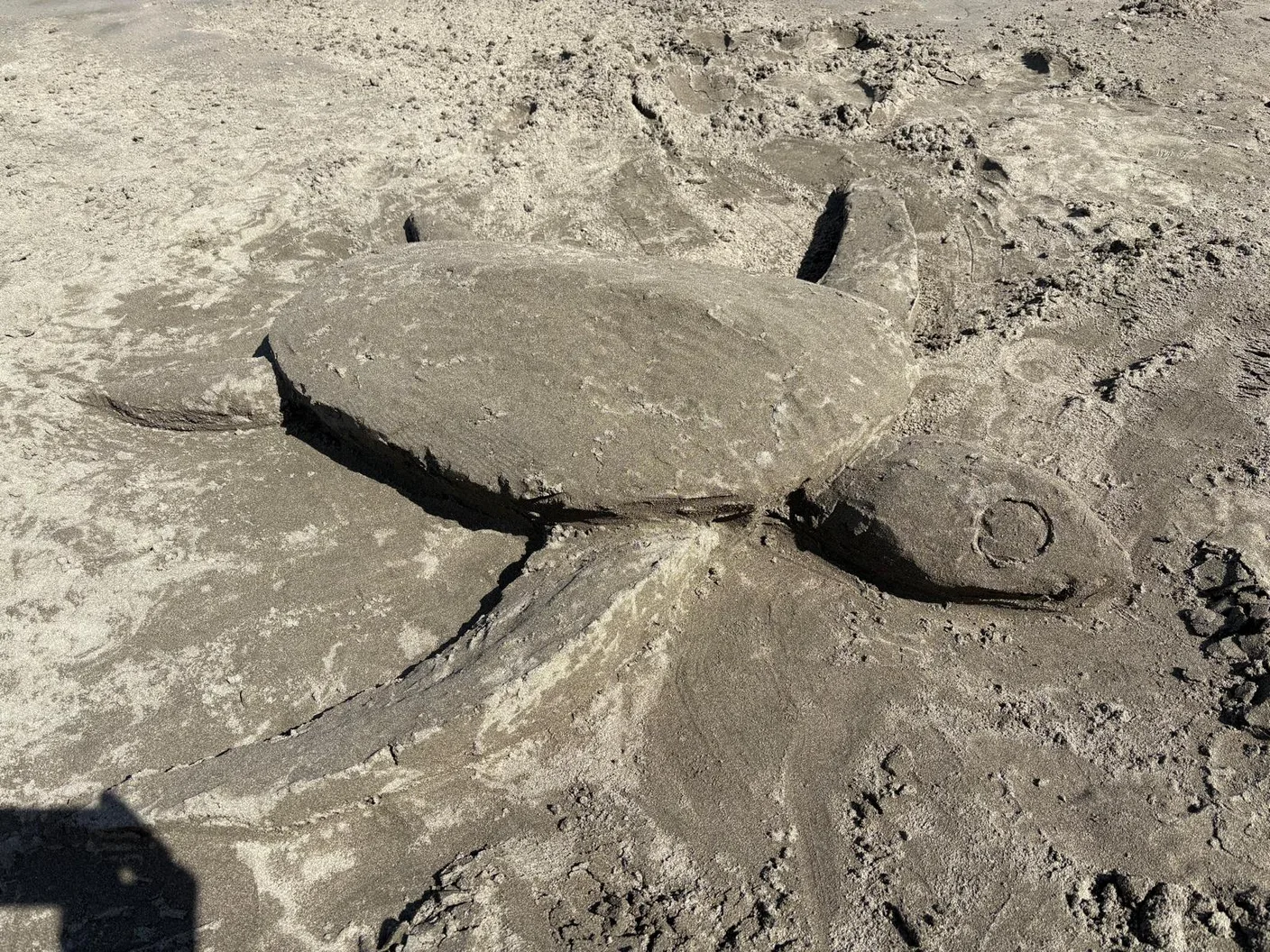
During one of my visits, I made a sea turtle in the sand.
Nothing elaborate.
Just something I enjoyed doing while spending time at the beach.
That's part of what appeals to me about coastal living.
Being able to walk outside, spend time in the sun, enjoy the ocean, and do simple things without needing an expensive activity planned for every hour.
Would I Live in Jacó?
I've enjoyed visiting Jacó, but two short vacations aren't enough for me to make a serious recommendation about living there permanently.
I'd want to investigate long-term housing costs, the neighborhoods, nighttime noise, rainy-season conditions, and how busy the town becomes during the high season.
And that's really the point.
A town that works wonderfully for a few days at the beach might be a completely different experience when you're living there year-round.
Especially when the tourists arrive and everything becomes more expensive.
I'd rather know those things before committing to a place than discover them afterward.
Limón and Puerto Viejo: Sometimes the Weather Makes the Decision for You
I've considered visiting Limón and Puerto Viejo on Costa Rica's Caribbean coast several times.
The area looks interesting, especially with its tropical vegetation, beaches, and access to nature.
But the amount of rain has kept me from going.
A local told me something interesting about the weather there.
According to him, you can really only count on about two months a year being reliably dry.
He also told me that during much of the rest of the year, mornings are often cloudy or rainy until around noon.
That certainly caught my attention.
So I looked into the climate records.
Costa Rica's National Meteorological Institute confirms that the Caribbean coast doesn't have a well-defined dry season like the Pacific side.
Instead, there are two relatively less rainy periods, generally February and March, and September and October.
But even during the least rainy months, historical regional conditions can still produce roughly 100–200 millimeters of rain.
That's about four to eight inches.
Not exactly what I'd call dry.
And the local's observation about rainy mornings is consistent with the official description of the regional weather patterns.
Rainfall on Costa Rica's Caribbean coast frequently occurs at night and during the morning.
The Pacific coast has a different pattern, with rainy-season showers often developing in the afternoon or early evening.
So while the climate records identify about four relatively less rainy months rather than just two, the resident's broader description made sense.
On one occasion when I was considering visiting, the amount of rain expected during my trip was enough to change my mind.
I simply didn't feel like traveling all that way to spend much of my time waiting for the rain to stop.
Of course, some people love rainy tropical environments.
And there's no denying the appeal of lush vegetation and tropical scenery.
But if I'm moving somewhere because I want abundant sunshine, morning walks on the beach, and plenty of opportunities to spend time outdoors, the rainfall patterns are something I want to know about.
I haven't visited Limón or Puerto Viejo yet, so I'm not going to pretend I can give you a firsthand assessment of either town.
But I can certainly investigate the climate before deciding whether it's somewhere I'd want to live.
And that's a good example of why I don't think you should choose a place based on a few beautiful photographs.
Climate references:
- Costa Rica's National Meteorological Institute (IMN) — Regional Climate Information (PDF)
- Costa Rica's Official Tourism Website — Climate and Rainfall Patterns
The Real Cost of Living in Costa Rica Depends on How You Live
People are constantly asking whether Costa Rica is expensive.
Compared with Nicaragua?
In my experience, absolutely.
Especially when it comes to restaurants, groceries, and plenty of everyday purchases.
But that doesn't tell the whole story.
I can travel a considerable distance by bus for a relatively small amount of money.
I can find inexpensive rooms in Liberia.
I can save money by visiting Jacó outside the high season.
And I can sometimes save hundreds of dollars on airfare by choosing the right airport.
At the same time, I can spend American-style restaurant prices on meals in Jacó.
Or pay far more for a hotel room simply because everybody else wants to visit during the same week.
So which is it?
Is Costa Rica expensive or affordable?
That depends on how you live.
Do you eat in restaurants every day?
Do you need a car?
Are you living in a popular tourist area?
Do you require air conditioning?
How frequently do you travel?
Are you renting a house long-term, or paying nightly hotel rates?
These questions matter.
And that's why I'm skeptical of articles claiming you can live comfortably in Costa Rica for some magical monthly amount.
Maybe the author can.
But are you going to live the same way?
Seven Things I'd Investigate Before Moving to Costa Rica
If I were seriously considering living in Costa Rica, here's what I'd want to know before committing to a long-term rental.
1. The Actual Climate
Not the average annual temperature.
The weather during the months I'm going to be there.
How much sunshine?
How much rain?
How hot does the bedroom get at night?
Does the area have a real dry season?
I've learned that weather patterns can make a tremendous difference in how much time you actually spend outside.
2. The Sleeping Environment
I would want to spend several nights in the actual room or neighborhood before signing a lease.
Are there bars nearby?
Barking dogs?
Road noise?
Bright outdoor lighting?
Can I sleep with the windows open?
My experience at Hotel South Beach reinforced how much difference the location of a room can make.
3. Air, Water, and Environmental Conditions
I'd investigate local air quality, nearby burning, drinking-water reliability, and other potential environmental concerns.
I'd also make my own measurements of the electrical and wireless environment when practical.
These are additional factors I personally consider, not substitutes for established environmental testing or medical advice.
4. Transportation and Airport Access
How easy is it to get around without a car?
Is there a reliable bus station nearby?
How far is the international airport?
How much will it cost to visit family or travel internationally?
My experience with Alajuela and Liberia showed me that transportation convenience can be a major advantage.
5. The Real Cost of My Lifestyle
I'm not particularly interested in what somebody else claims to spend living in Costa Rica.
I want to know what it would cost me.
Housing.
Food.
Restaurants.
Electricity.
Transportation.
Medical services.
And the other things I actually use.
Because a place that's affordable for somebody else might not be affordable for me.
6. Healthcare and Reliable Infrastructure
How far away is the nearest suitable hospital?
What happens during a power outage?
Is the water supply reliable?
How dependable is the internet?
Can I obtain the supplies and services I need without traveling several hours?
These become important considerations when you're living somewhere permanently instead of just visiting.
7. The Life I'm Actually Going to Live
This may be the most overlooked question of all.
Am I going to have friends?
Things to do?
A reason to get outside?
Is the neighborhood somewhere I enjoy spending time?
Or am I going to move to a beautiful tropical location and spend most of my days sitting indoors?
There's a big difference between enjoying a place on vacation and building a life there.
And I've learned not to confuse the two.
So Where Would I Choose to Live in Costa Rica?
Here's where people usually expect me to declare a winner.
And I can't.
Based on my experiences so far, Alajuela would certainly deserve a closer look.
It surprised me with its shopping, restaurants, transportation options, and proximity to an international airport.
Liberia would also be worth considering, especially because of its convenience for traveling between Costa Rica and Nicaragua.
Jacó?
I've enjoyed visiting, particularly outside the busy season.
But I'd want to investigate the long-term living conditions and neighborhood noise before making that decision.
As for Limón and Puerto Viejo, I haven't visited yet.
The Caribbean coast interests me, but the rainfall patterns would be a significant consideration.
And there are plenty of other parts of Costa Rica I haven't explored enough to make personal recommendations about.
The Central Valley.
Guanacaste's smaller communities.
The southern Pacific coast.
Mountain towns.
Those places may offer very different living environments.
But I wouldn't pretend I can rank them based on personal experience I don't have.
I'd rather investigate the actual conditions first.
Costa Rica Has Plenty of Beautiful Places. Finding the Right One Is Another Matter.
I understand why people are attracted to Costa Rica.
The natural beauty is remarkable.
There are beaches, mountains, rainforests, wildlife, and many opportunities to spend time outdoors.
But none of that automatically means a particular town is the right place for you.
I've stayed in convenient cities that surprised me.
Found transportation connections that saved hours of unnecessary travel.
Enjoyed reasonably priced beach vacations by avoiding the busiest season.
And discovered that something as simple as choosing a garden-view hotel room can make an enormous difference in how well I sleep.
These aren't things you'll necessarily learn from a list of the ten best places to live in Costa Rica.
And yet, they're exactly the things that can determine how much you enjoy living somewhere.
That's why I started Healthy Latitude.
I help people evaluate potential places to live through a health-and-environment lens, considering climate, sunlight, air and water quality, noise, access to nature, infrastructure, and the realities of everyday life.
I'm not selling houses.
I'm not an immigration lawyer.
And I'm not going to promise that moving to Costa Rica—or anywhere else—is going to fix your health.
What I can do is help you examine the tradeoffs, narrow down the places worth investigating, and make a more informed decision.
If you're already considering a few locations, that's what we explore in my 90-minute Healthy Location Strategy Session.
Because finding a beautiful place is easy.
Finding somewhere you actually want to live?
That's a different project entirely.
David Key is the founder of Healthy Latitude and an ANMCB-certified Quantum Biology Practitioner. He has spent years living and traveling in Mexico and Central America, exploring how everyday environments influence lifestyle and well-being. Healthy Latitude's consulting is educational and does not replace medical, legal, or other licensed professional advice.
Related reading: